Don’t let the word “jazz” fool you. Koktebel Jazz Festival has as much to do with jazz per se as Richard Wagner or The Future London Sounds. In fact, the extreme diversity of the gathering has been and remains the haters’ favorite motif throughout the KJF’s fifteen-year history. However, having brushed aside the “too much diversity is chaos” mantra, the organizers have soldiered on long enough to make theirs a cult gathering in Ukraine, deservedly so.
Examining the history of the Fest reveals the evolution of Ukrainian pop culture as a whole. In fact, it’s impossible to separate KJF from the country’s overall timeline, given its troubled social development and ongoing political turmoil. Stemming from the precarious conditions in modern Ukraine, the Koktebel Jazz Fest can be rightfully considered a uniquely remarkable event.
During its 15-year run, Koktebel featured over 3,000 musicians and hosted at least 500,000 adoring fans. Not very impressive by Sziget standards, but the word jazz did manage to throw off a whole bunch of otherwise would-be goers from Europe. Many times, KJF was at the epicenter of local authorities’ power plays, which had nearly ended the event. The Crimea annexation dealt another near-death blow to the Fest. Still, after moving a few times, zigzagging away from handout-hungry local apparatchiks, organizers finally settled in Chornomorsk, keeping the moniker Koktebel for good luck and, wouldn’t you know it, brand value.
For dozens of prominent Ukrainian artists, Koktebel was the first ever performance in a festival setting. For bands like Daha Braha and The Hardkiss, KJF became a springboard to international acclaim. Nino Katamadze, Aquarium, Lyapis Trubetskoy, MARU, MANSOUND, Katya Chilly Group, Viviene Mort, Mamarika, The Hypnotunez, Antikvariniai Kaspirovskio Dantys, and hosts of other up-and-coming artists and star acts from Ukraine and the post-Soviet countries have used the Fest either as a launching pad for tours or for presenting their new wares.
Due to its diverse, eclectic nature and the vast array of visitors’ musical tastes, Koktebel Jazz Festival has always stood out among its European peers. “It was never about the purity of a single art form,” says the guru of Ukrainian jazz, Alex Kogan. “The multitude of genres, the sheer madness of the mix of traditional jazz and weird electronica, Balkan horns, the French chanson, power pop and folk richly spiced with almost deviant social interactions and bands that base their performances almost entirely on sound effects like course surface-rubbing, wood-on-wood knocking, blowing air flute in the nude and God knows what else was, and still is the Fest’s draw number one.”
This year, the number of stages will go up to five, and the palette of genres represented here will make even the loosest Berklee College of Music professor strip naked and run for a tattoo parlor. In short, this year’s Fest is more of everything: more music, more art, more discoveries, more mind-blowing stories to share with old friends, and more opportunities to make new ones.
Nu Stage (Main Stage)
Shantel, the king of the Balkan dance floor, the author of the soundtrack for the Borat movie, and the brains behind the European super-hit Disko Partizani, is headlining the Fest with his special show SHANTOLOGY 30 years. It used to be Goran Bregović; now Shantel and its Bucovina Club Orkestar promise no less swing with their crazy remixes of Balkan jazz, European beats, and Gypsy hollering.
The long-awaited guests of the festival will be a controversial bunch from the Foggy Albion, one of the best live bands in the world, and the legendary Asian Dub Foundation. For more than twenty years, their slaughterhouse rap-reggae has been lauding some serious social issues in a way that makes you dance the troubles away. During their long and illustrious career, Asian Dub Foundation shared the Stage with Rage Against The Machine, The Cure, and Radiohead. They have performed at some of the world’s best festivals, and in August 2017, they will play in Ukraine for the first time. And it will be at the Koktebel Jazz Festival! Yeee-haaaawww!
A quixotic melancholiac from Sweden, Jay-Jay Johanson had once graced the side stage of the Koktebel Jazz Festival, though in Kyiv, which is inland. This time around, the sweet Swede is going to return to his natural habitat and perform by the sea. Jay-Jay Johanson’s musical style draws from elements of jazz, trip-hop, and electronic music. Any one of his numbers is a perfect soundtrack for a warm day by the water, sipping tea, and enjoying a toke of a perfectly legal substance.
Red Snapper and Вагоновожатые are longtime friends of the Koktebel Jazz Festival. In the past, both crews have performed at the festival. Their shows were so incredible that this year the organizers had decided to invite them again to play at the Fest’s main Stage. Both bands have promised special surprises and entirely new music, exclusively presented to the patrons of the Koktebel Jazz Festival.
How would the 15th Anniversary of the Koktebel Jazz Festival go down without the frontman of the legendary German group De Phazz, Karl Frierson? It would go down extremely poorly. This year, Karl will once again make a special appearance at the festival and blow the rest of the unblown minds in Ukraine.
Finally, one of the main surprises of the 2017 event will be the return of TNMK Jazzy, a unique side-project by the band Tanok on the Maidan Congo, the idea of which was conceived and first presented at the festival in 2004-2005. You will hear the original TNMK tracks in jazz arrangements. One show only!
Open Stage (free admission)
The Open Stage will continue to be the forum for discovering new names. This year, more than 200 musicians from Ukraine, Russia, Belarus, Poland, Italy, Spain, and the United Kingdom have submitted applications to participate in the Open Stage program. The Koktebel Jazz Festival Expert Council has already processed all submissions and will publish the names of the lucky ones who will be honored to play on the Open Stage for the Fest’s patrons in early August.
Campfire Stage
This year’s innovation quirk is the acoustic Stage in the tent city. Here in the shade, hidden away from the burning southern sun, you can enjoy the acoustic performances by the acts who’d just finished up on the main Stage and want to go on entertaining the fans in a more serene setting.
Jazz and The Sea
Jazz stage of the festival is under the perpetual direction of Ukraine’s Jazz Grandmaster Alexei Kogan, which means, jazz – and jazz only, no hippies with ocarinas. There will be performances by Nazgul Shuyaev, Roman Kolyada, and Ossein Bekirov’s trio. The project, The Jazz Stories, will be presented by Jazz in Kyiv and Alexei Kogan, a collection of short essays about music and the author’s recollections. Of course, talking about music is impossible without it so that the stories will be accompanied by live performances by Jazz in Kyiv Band.
Special Stage
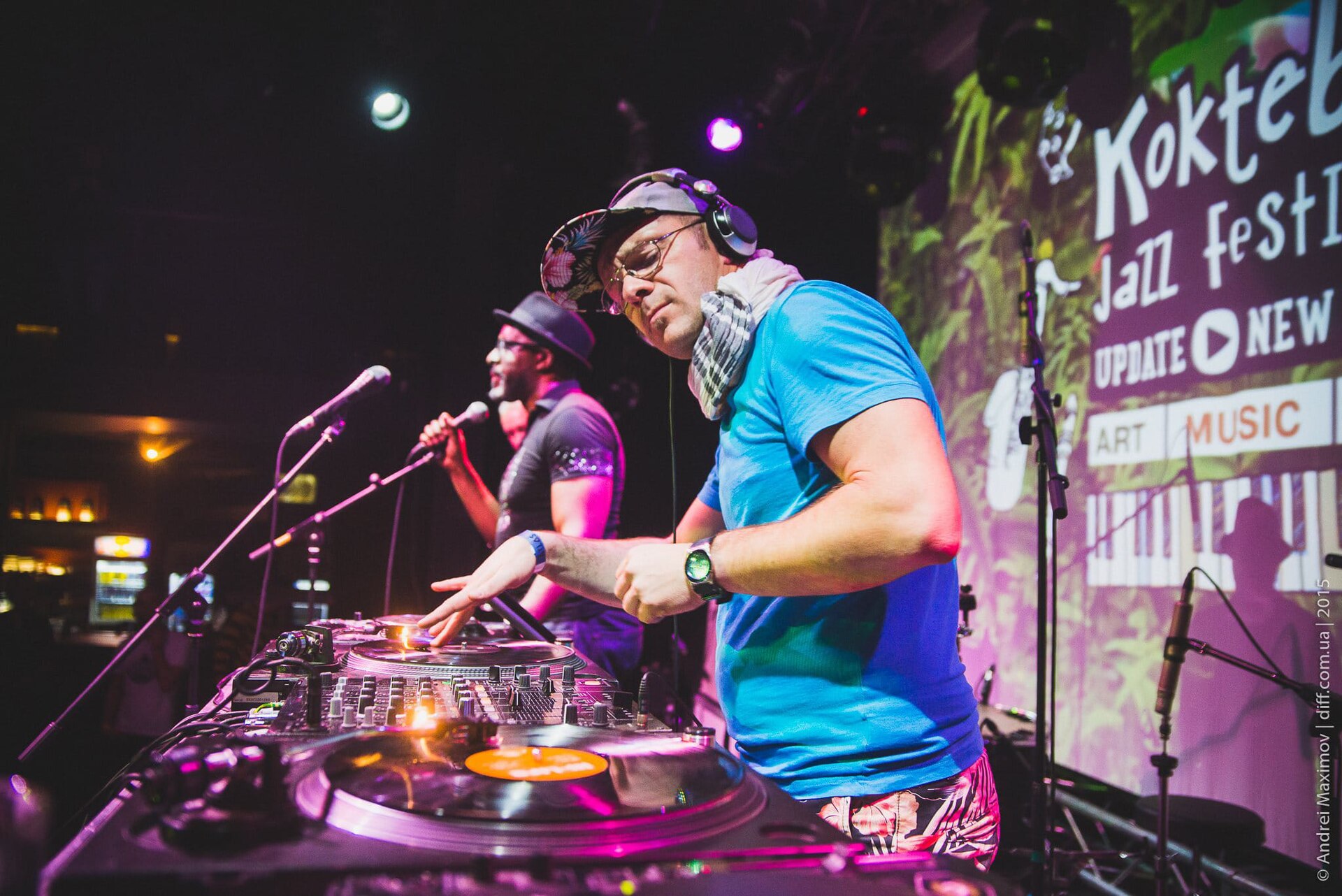
The Special Stage is a multi-purpose location, which is to say Mayhem Central, where the best-known Ukrainian party-starters, beat-droppers, headliners, and under- and overground kings will be rocking the dance floor from oblivion to eternity. Want some names? DJ Shustov, DJ Mishukoff, DJ Mavr, DJ Fozzy… And of course, the two, the only, the cream of our collective crop, the ball of our societal third eye – The Magazine DJs. The power duo consists of two of the most revered deejays on the Kyiv club scene: Vlad Fisun and Vladimir Sivash. Their electrifying sets have long become as sure a hallmark of quality entertainment at a music gathering as a 5 kW sound system or, in the case of KJF, Karl Frierson’s guest performance.
ARTiSHOCK
The legendary art festival, which has already become an integral part of the Koktebel Jazz Festival this year, is also celebrating its 5th anniversary: it turned 5 in 2017. ARTiSHOCK encompasses all genres of contemporary art, drawing inspiration from literature, independent cinema, and, of course, music. The theme of this year’s festival is the environment as a social phenomenon, to be appreciated from different perspectives (living environment, cultural environment, media environment, art environment, etc.). The program includes cinema exhibitions, lectures, open interviews and discussions, art performances, and documentary filmography.